• Art
  • moving images
  • tree numbers
  • contact
  • my journal
olga arseniev
  • Art
  • moving images
  • tree numbers
  • contact
  • my journal

about me

About me

After a long, award-winning career involving design and writing, I turned to botanical illustration and received a certification through eCornell (Cornell University) in 2022. Around this same time, I also became a certified Texas Master Gardener through the Texas A&M AgriLife Extension. My love of nature and volunteering took me to various community gardens and initiatives across the DFW metroplex. The many things I’ve experienced in my life, and my extended travels around the world have all been building blocks in the development of my art. My work has been exhibited at the American Society of Botanical Artists Annual Conference, and I’ve received several commissions. Currently, I’m a graduate student at University of Texas Dallas where I’m working towards my M.F.A in Art, Technology and Communication.

At the recent RAW (Research, Art and Writing) conference, I presented a participatory experience on the subject of local trees and the human connections we make with them. My work at UTD also includes mural painting, and content creation for LabSynthe on projects such as the Projections in Grotte du Lazaret, a Paleolithic cave in Nice, France, March 2025

The focus of my art revolves around the beauty and whimsy of plants, animals, and our natural world. I use diverse media that includes pencil, oils, gouache, watercolors, ink, words, photography, video, sound and digital manipulation.

aggressive coexistence

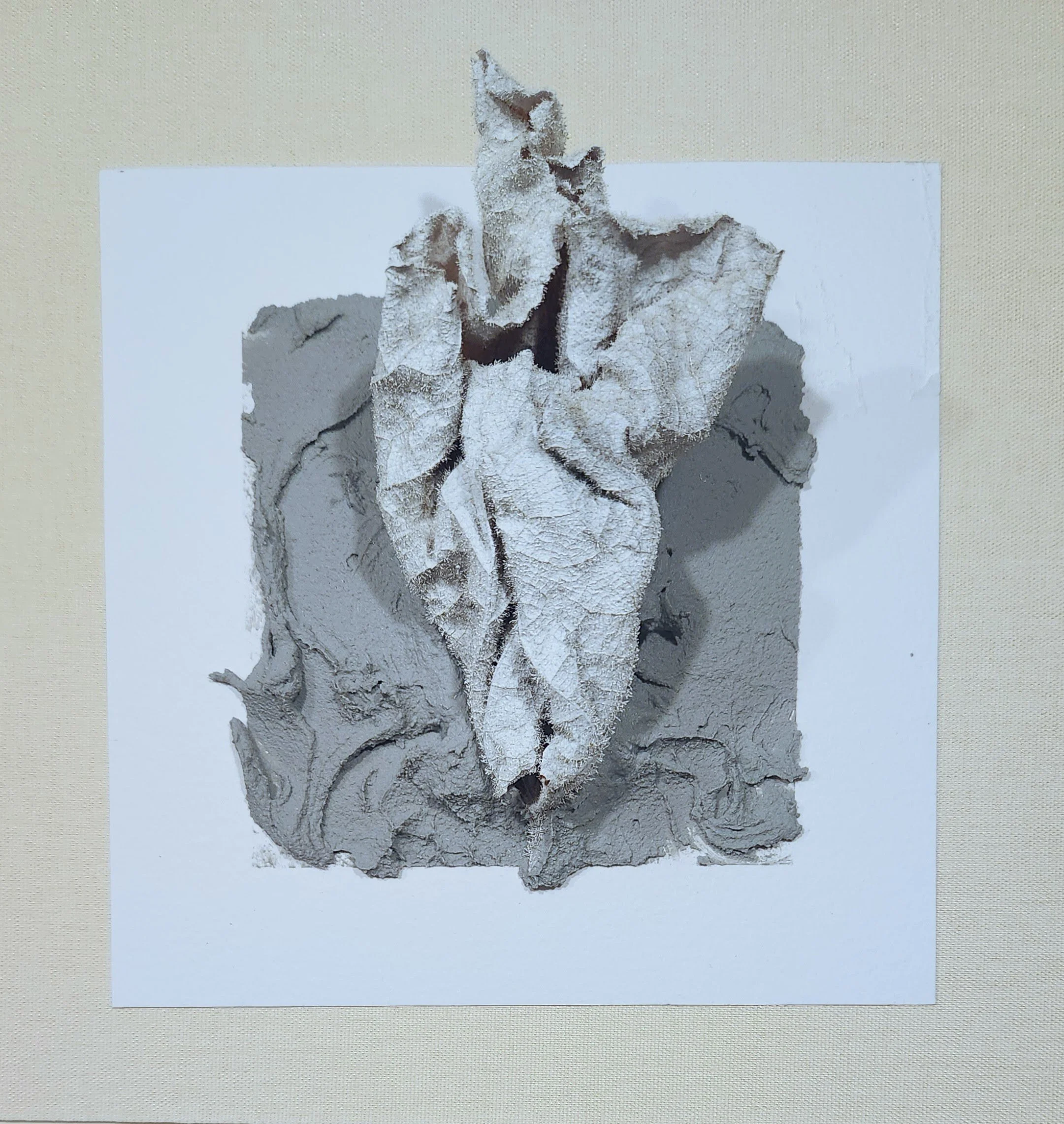
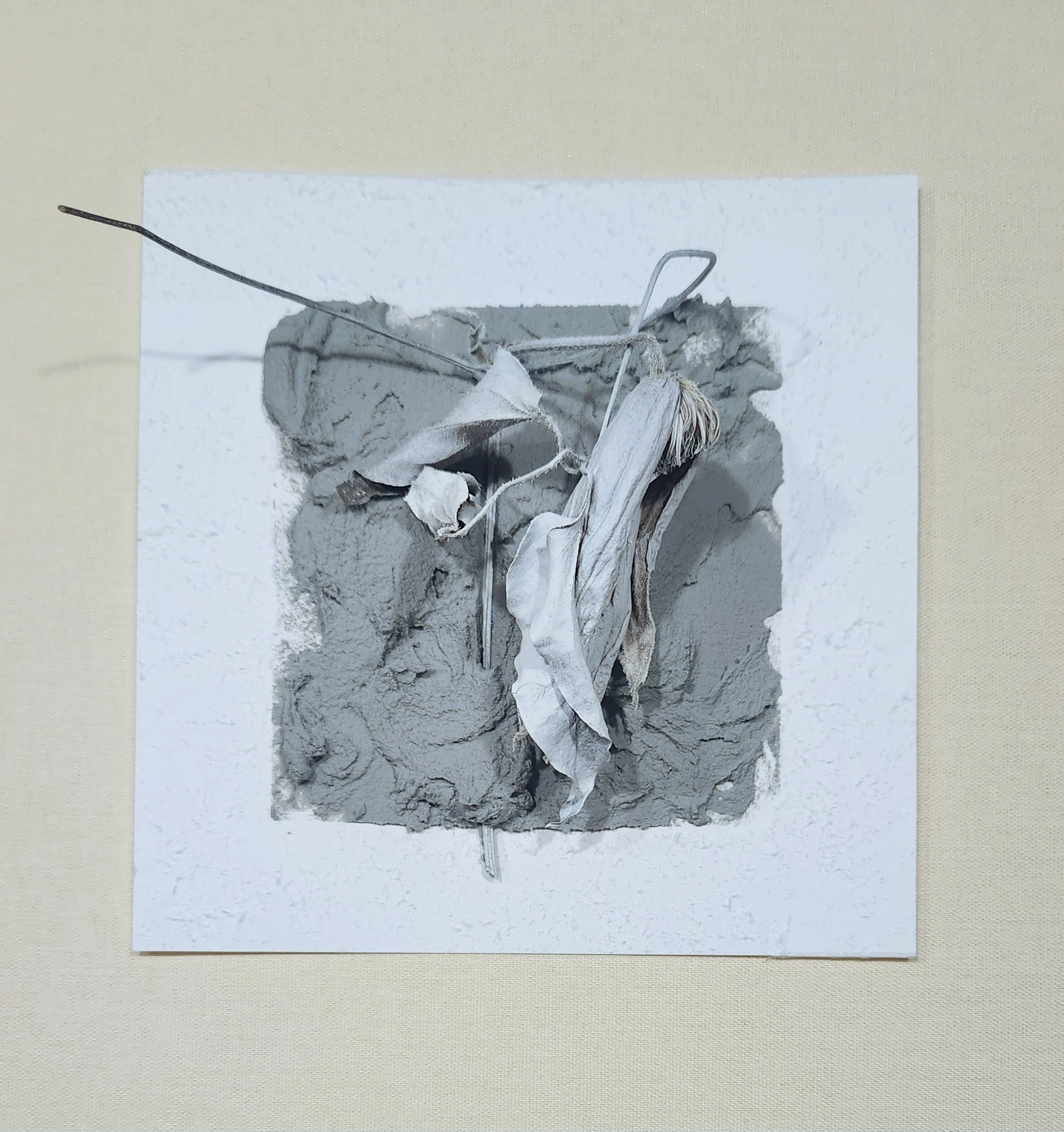
Plants and Concrete: Aggressive Coexistence

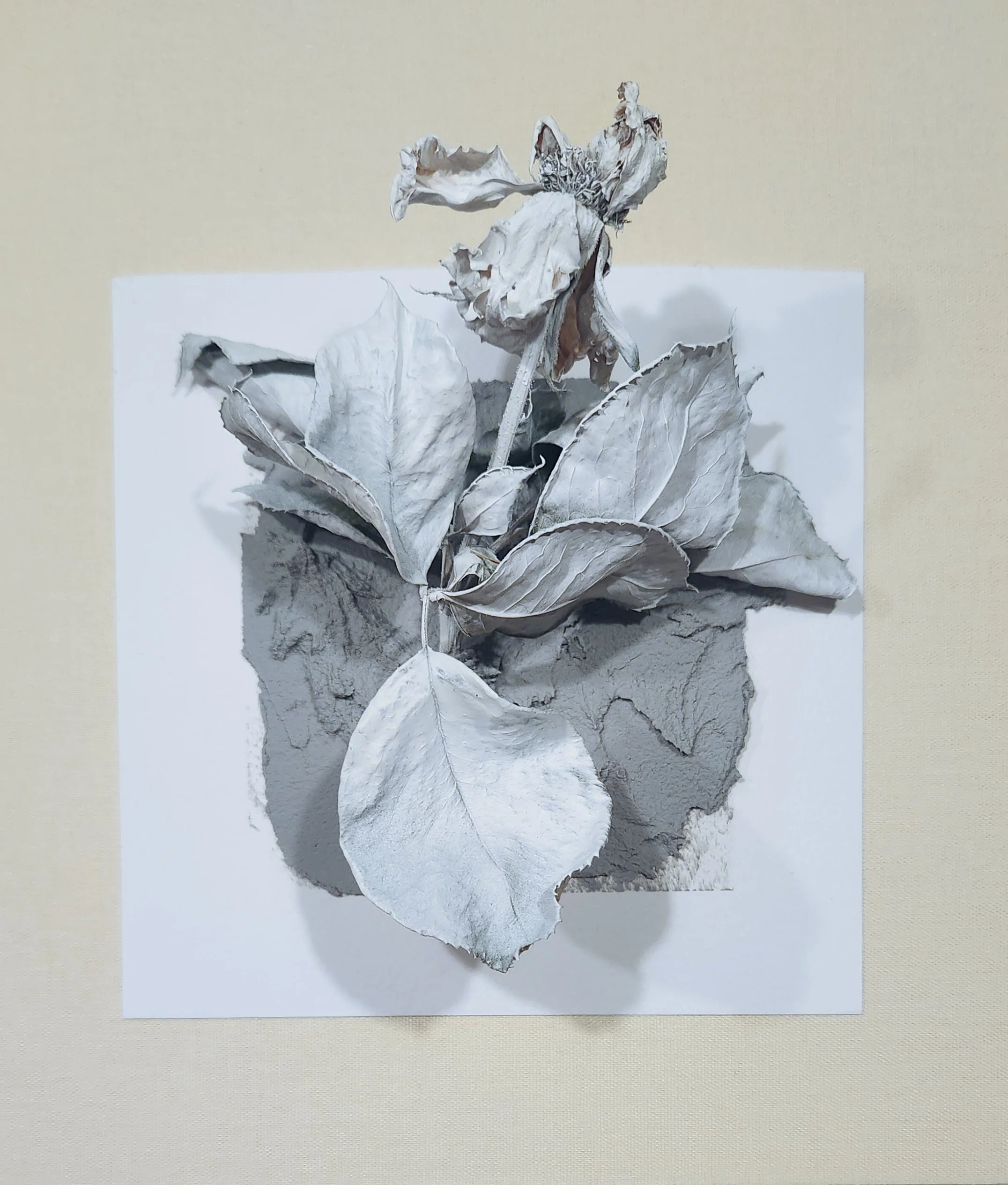
Plants display tenacity in the world around us. They seem to survive in places where they are either not welcome or not nurtured to succeed. This is especially evident when we look at the common use of concrete in urban and suburban communities. As a man-made material, concrete does not have a symbiotic relationship with plants. Yet the two have coexisted for centuries.

The idea behind Aggressive Coexistence is to get people to notice this relationship by showing dimensional moments of the two together. The plants gathered are preserved with an acrylic primer. By taking the color out of the situation, we see them as symbols rather than specific plants. They are then pressed into wet concrete that hardens, thereby freezing the moment in time. These pieces remind us of the relationship – the perpetual rivalry between the organic and the man-made, and the eternal struggle to coexist.
found objects

Found Objects

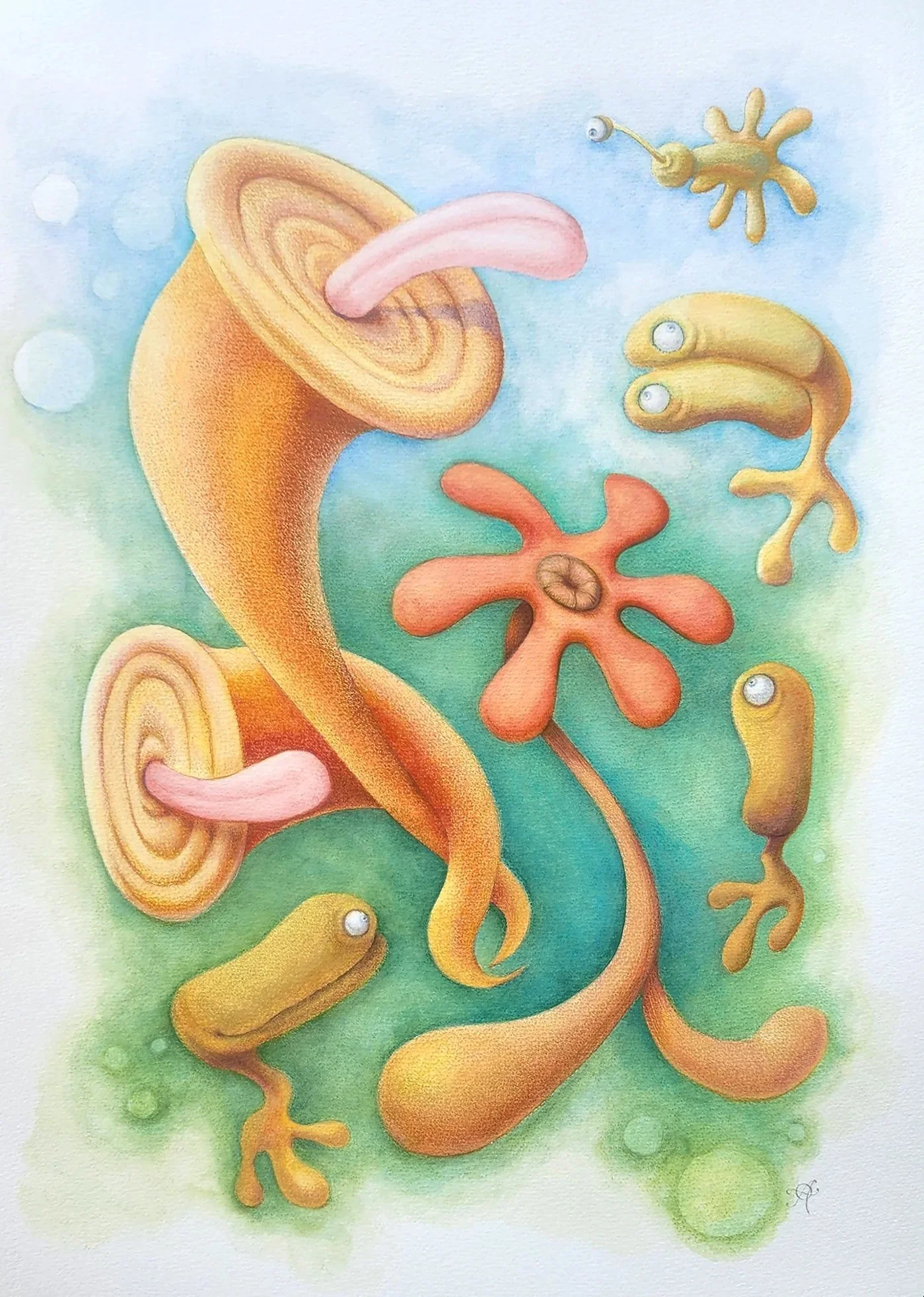
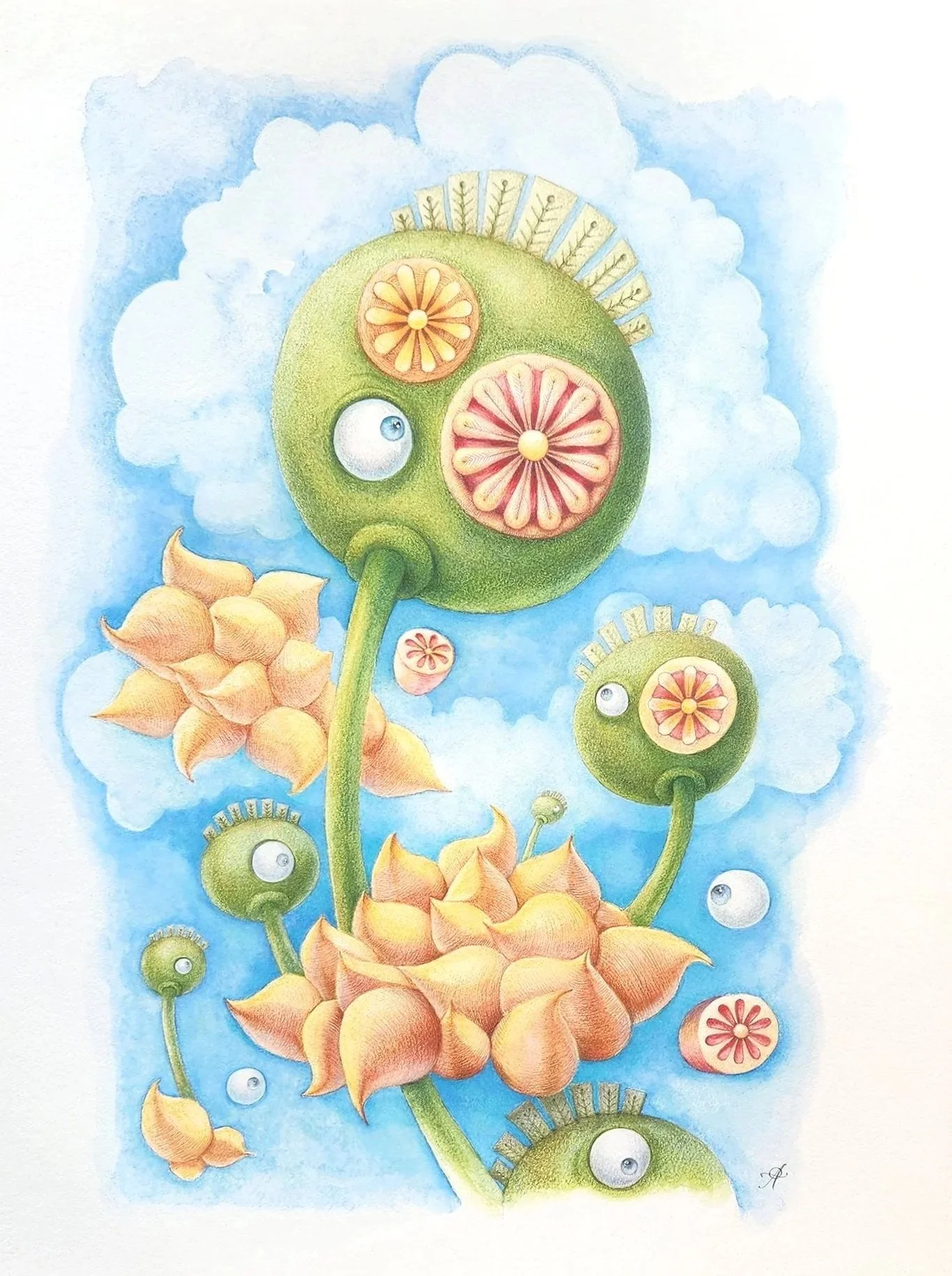
A “found object” is a term used to describe an item that is deemed common and therefore something to be discarded. Coined by the Dadaist, Marcel Duchamp, the practice of collecting these objects and repositioning them in the mind of a viewer is a way to challenge traditional art.
The items shared here are all naturally occurring, so one could say they have influenced art for thousands of years. But today, they are all too often unseen. By taking away their familiar colors, they look new and different – something we might actually notice despite their common presence in the world that surrounds us.

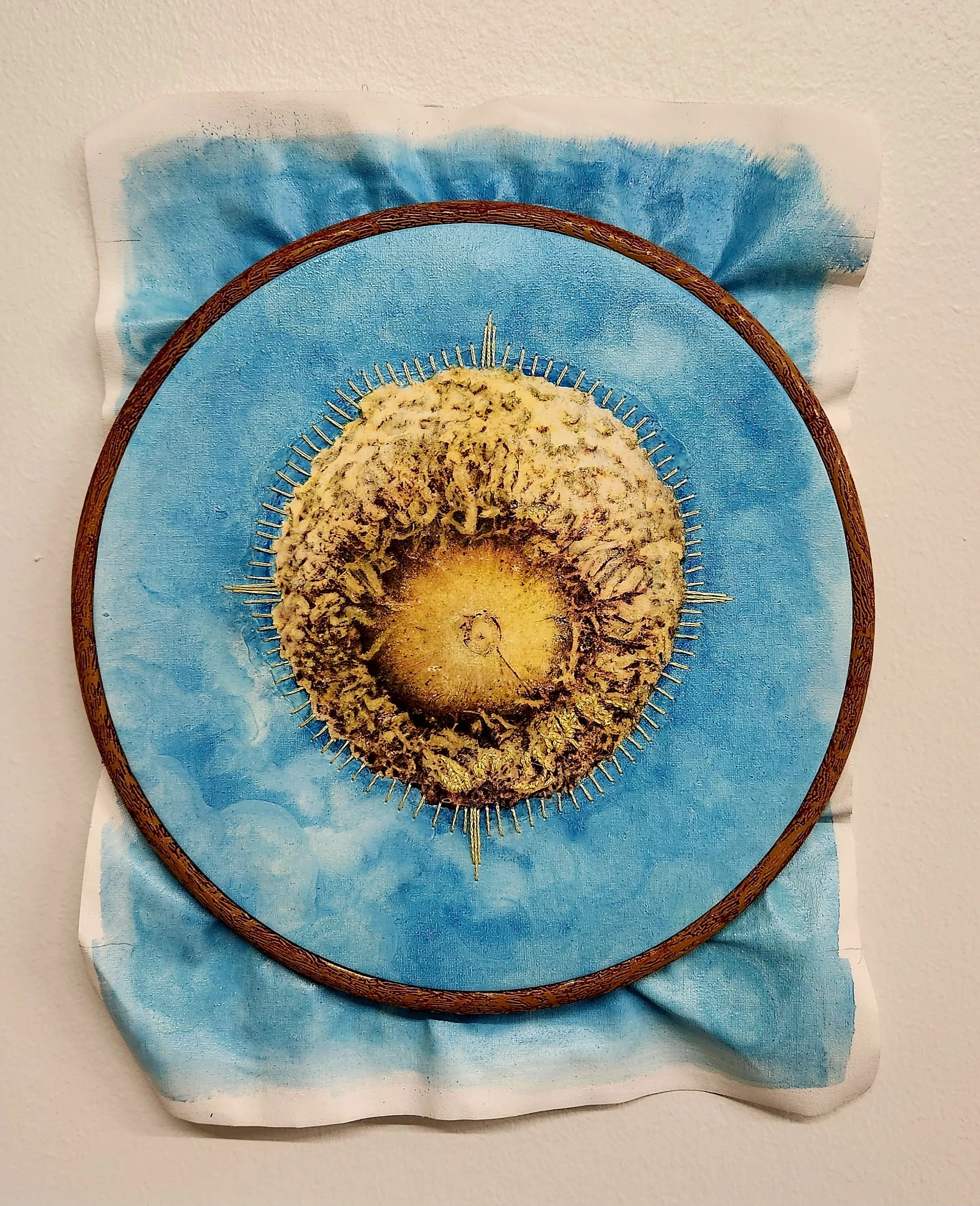
embroidered acorn

A process exploration: oil, graphite, photo transfer and embroidery study

east texas forest floor

A process exploration: photography, photo transfer, watercolors, graphite and acrylics.

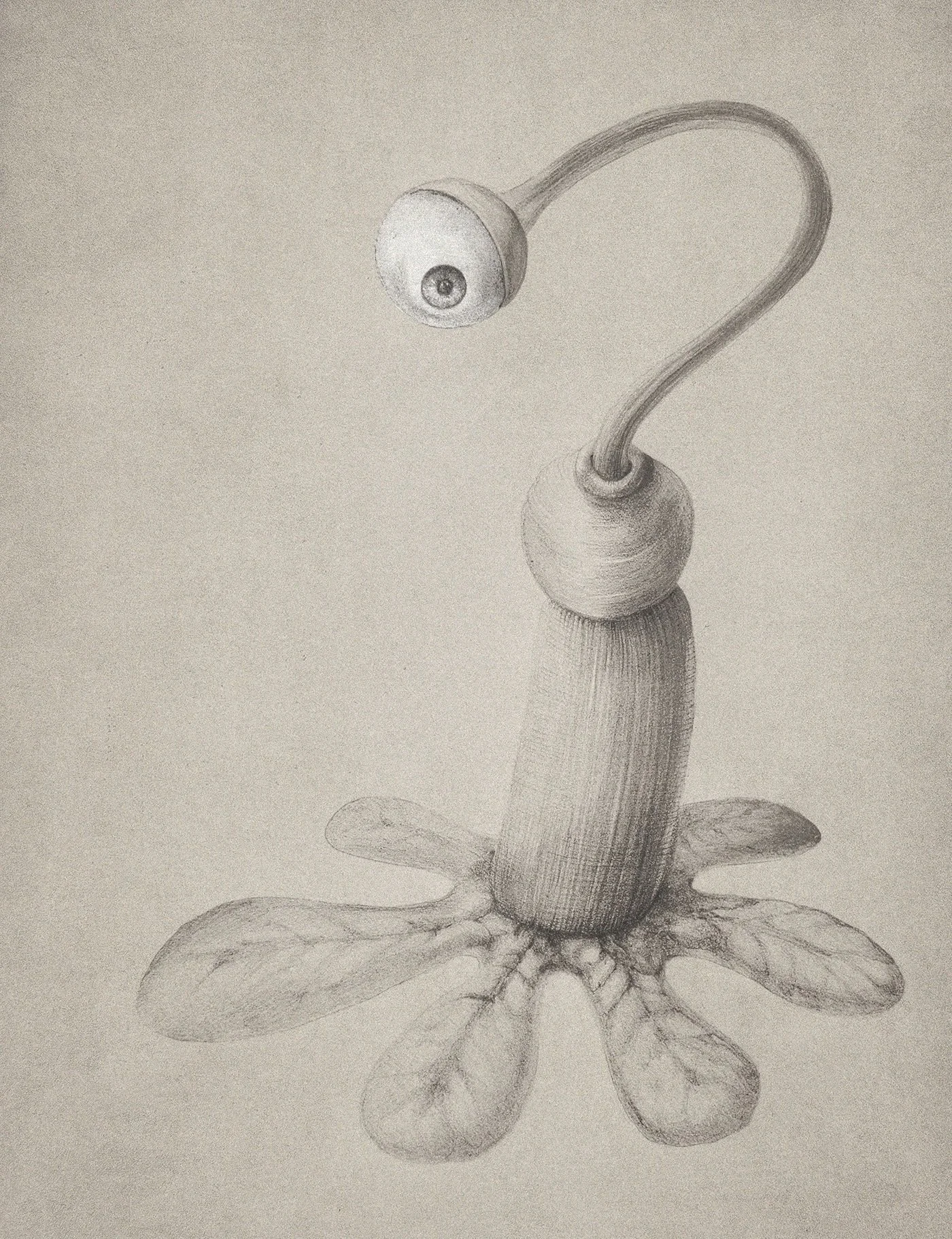
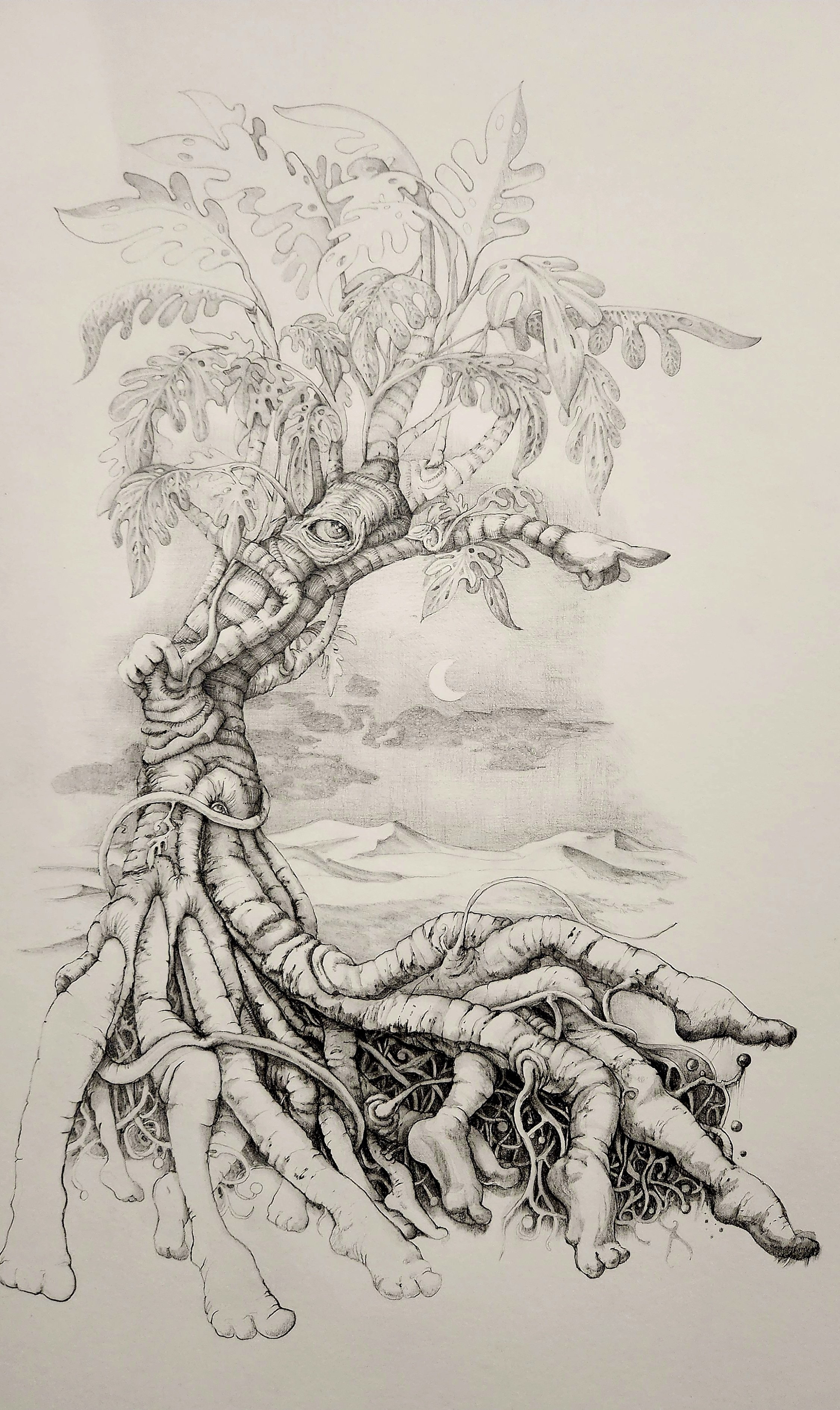
limb tree

Inspired by the Walking Palm trees that are capable of moving themselves closer to sources of water. This is my botanical surrealism exploration.

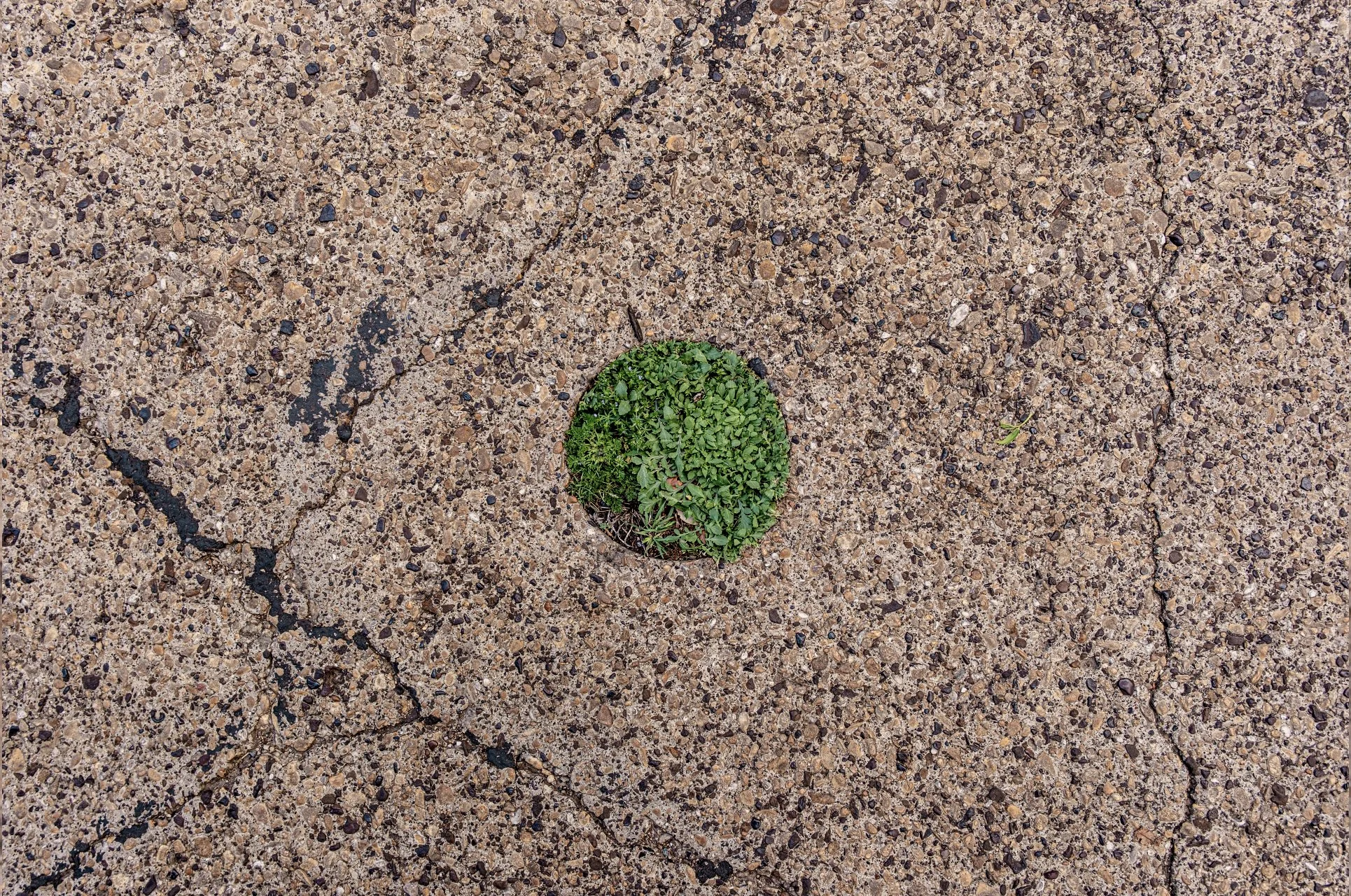
streetlife - a photo essay

A collection of my photos about plants that grow in the street. The macro images I’ve captured here evoke expansive scenes of landscape photography. Scroll down for more.

buddha's hands

A graphite study of the Asian citron fruit.

dried garlic flower

Seed study: the Elephant garlic bloom.

“Death brings life. Life brings death.” Marieke Nijkamp

Giant alliums that dry into seed-bearing flowers.

Photo manipulation

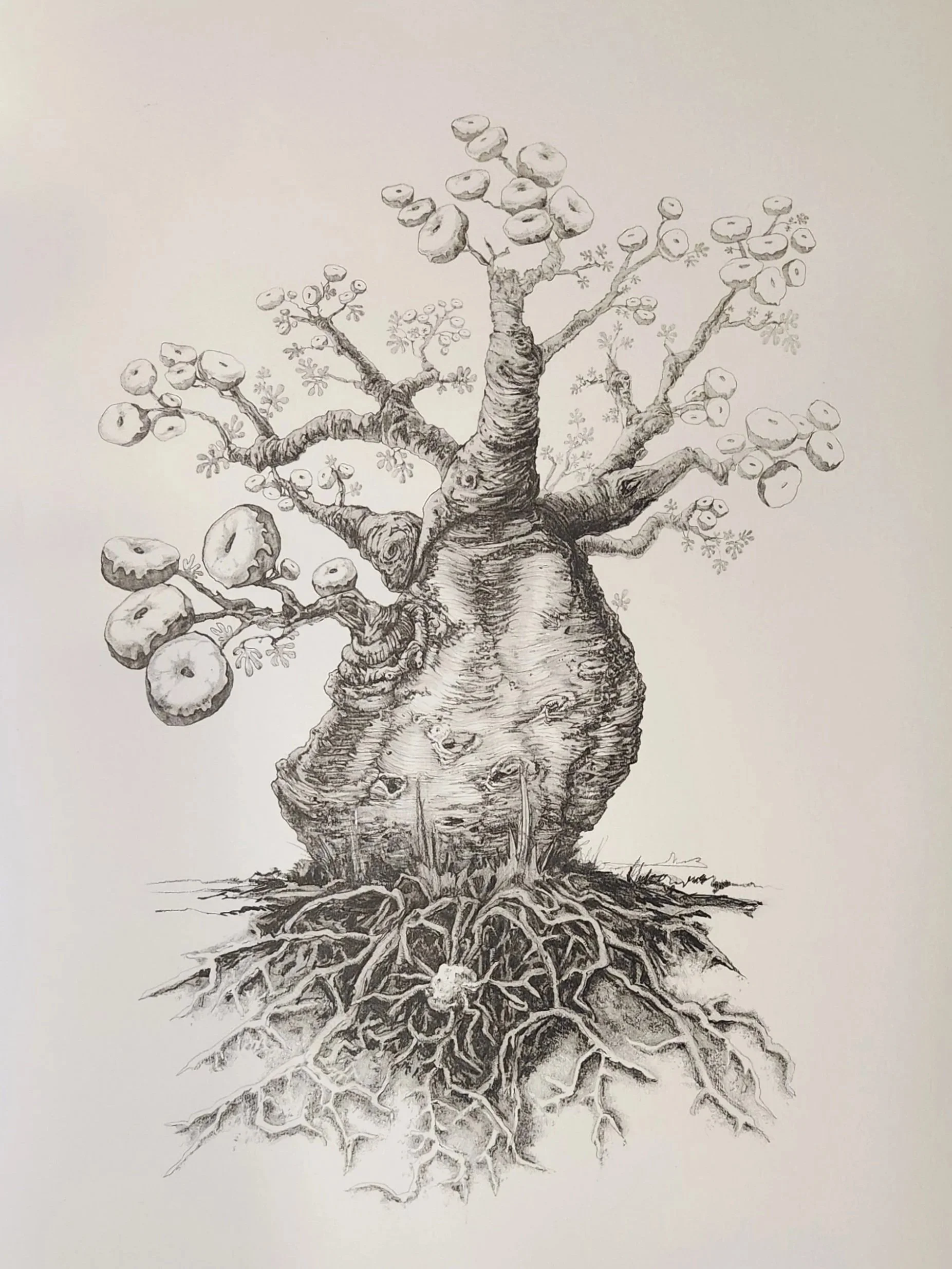
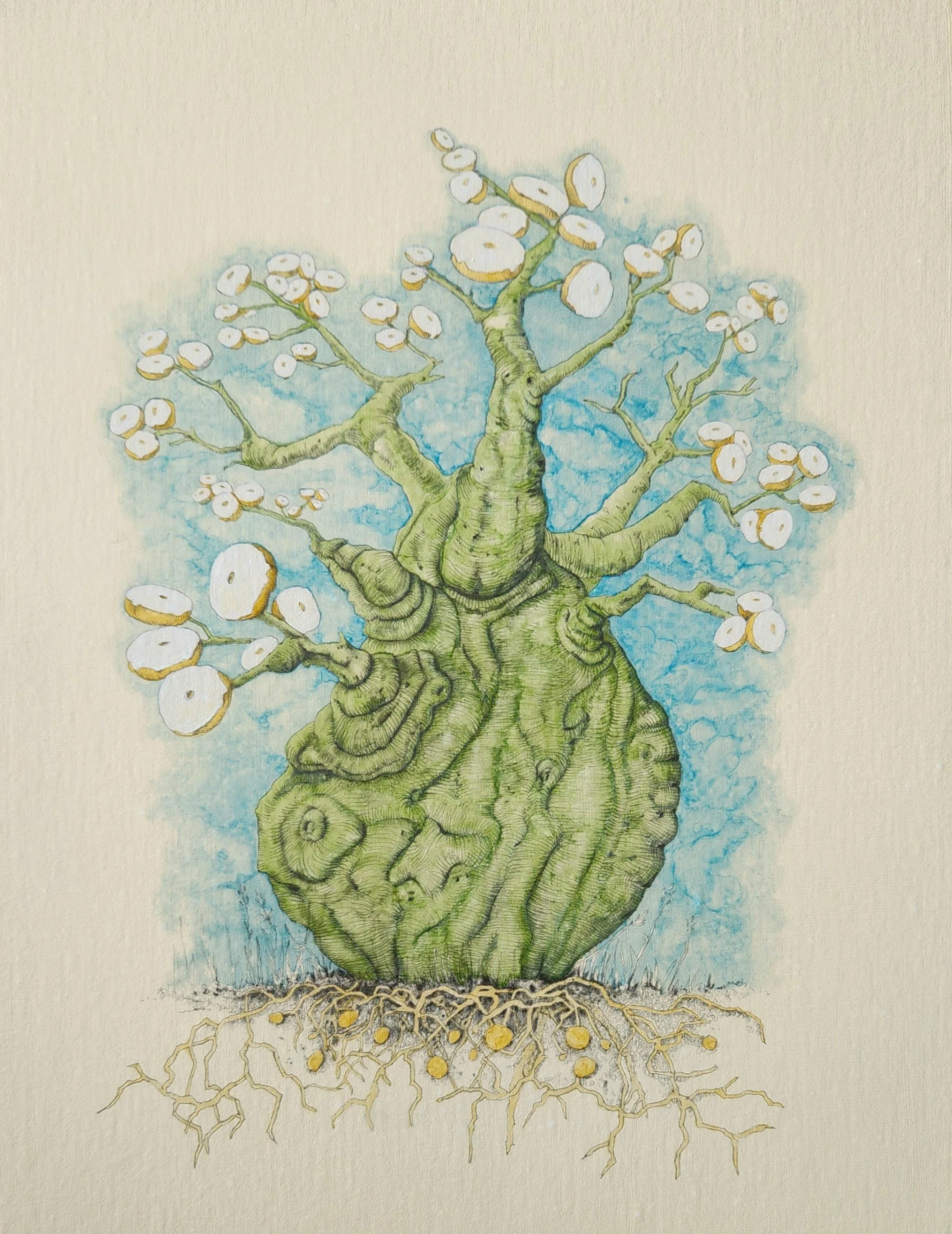
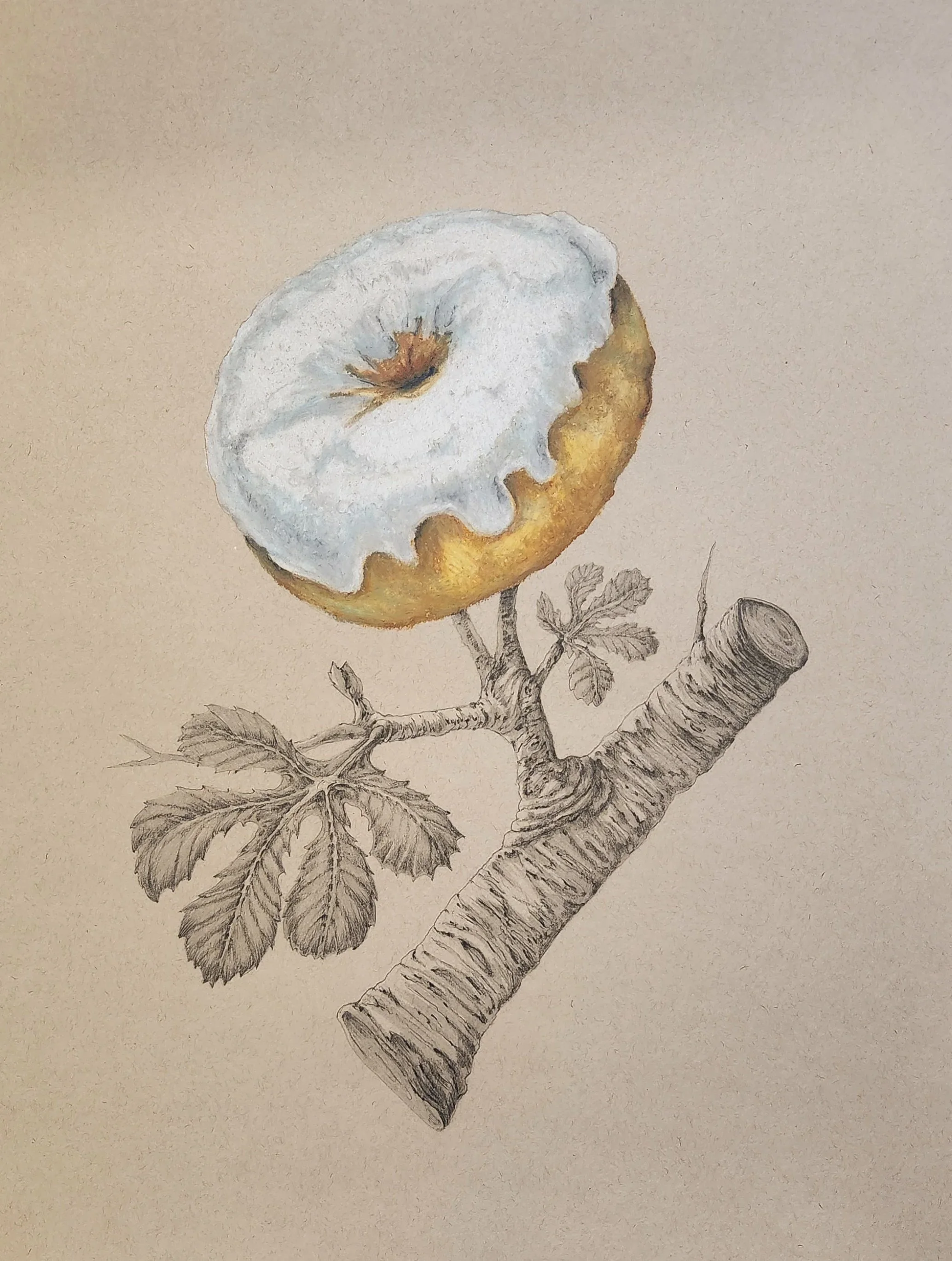
the donut tree

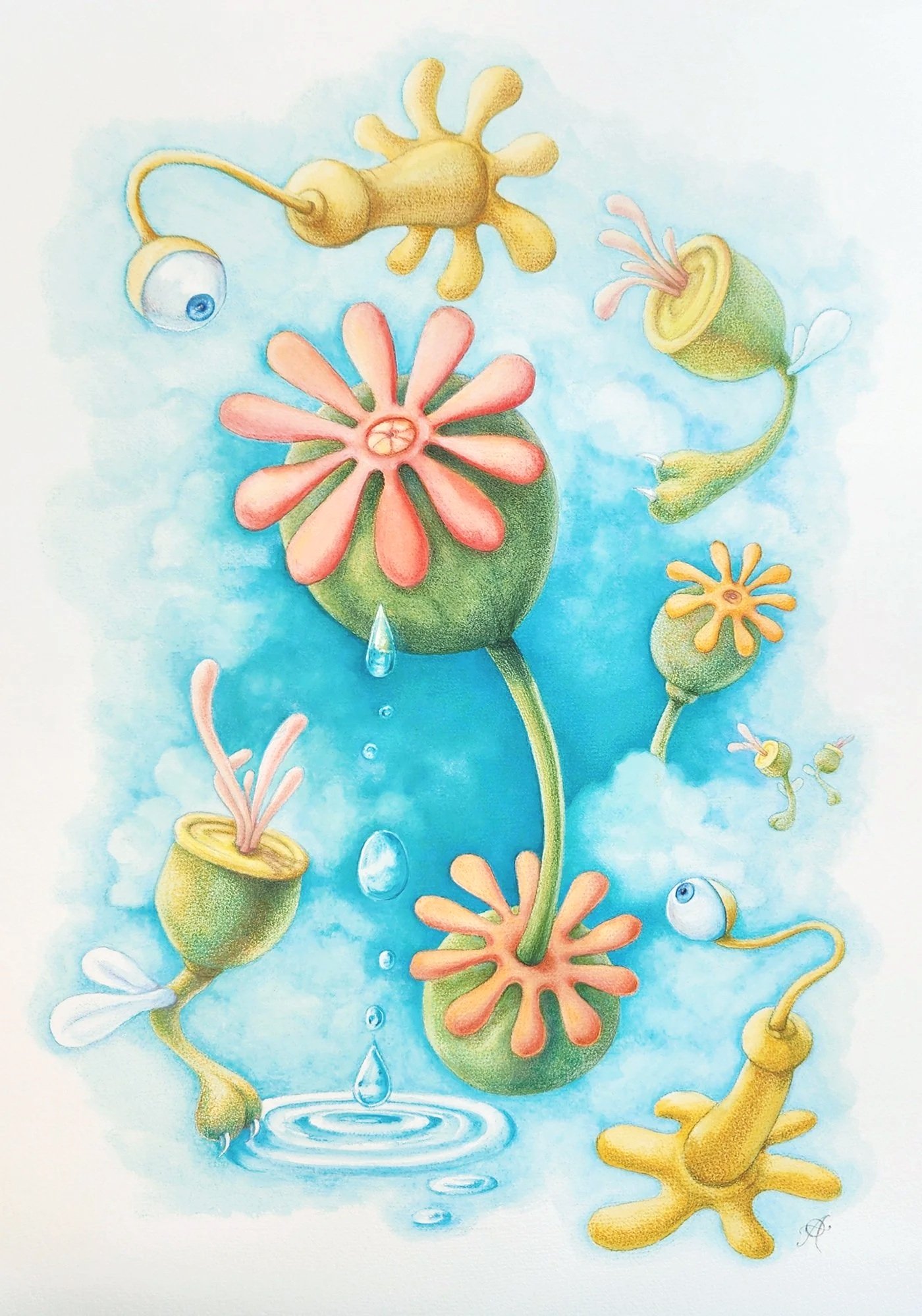
It all starts with a donut hole. Plant one in the ground and watch a Donut Tree grow.

Two studies:

11”x14” graphite and oil on canvas

18”x24” ink and graphite on toned sketch paper

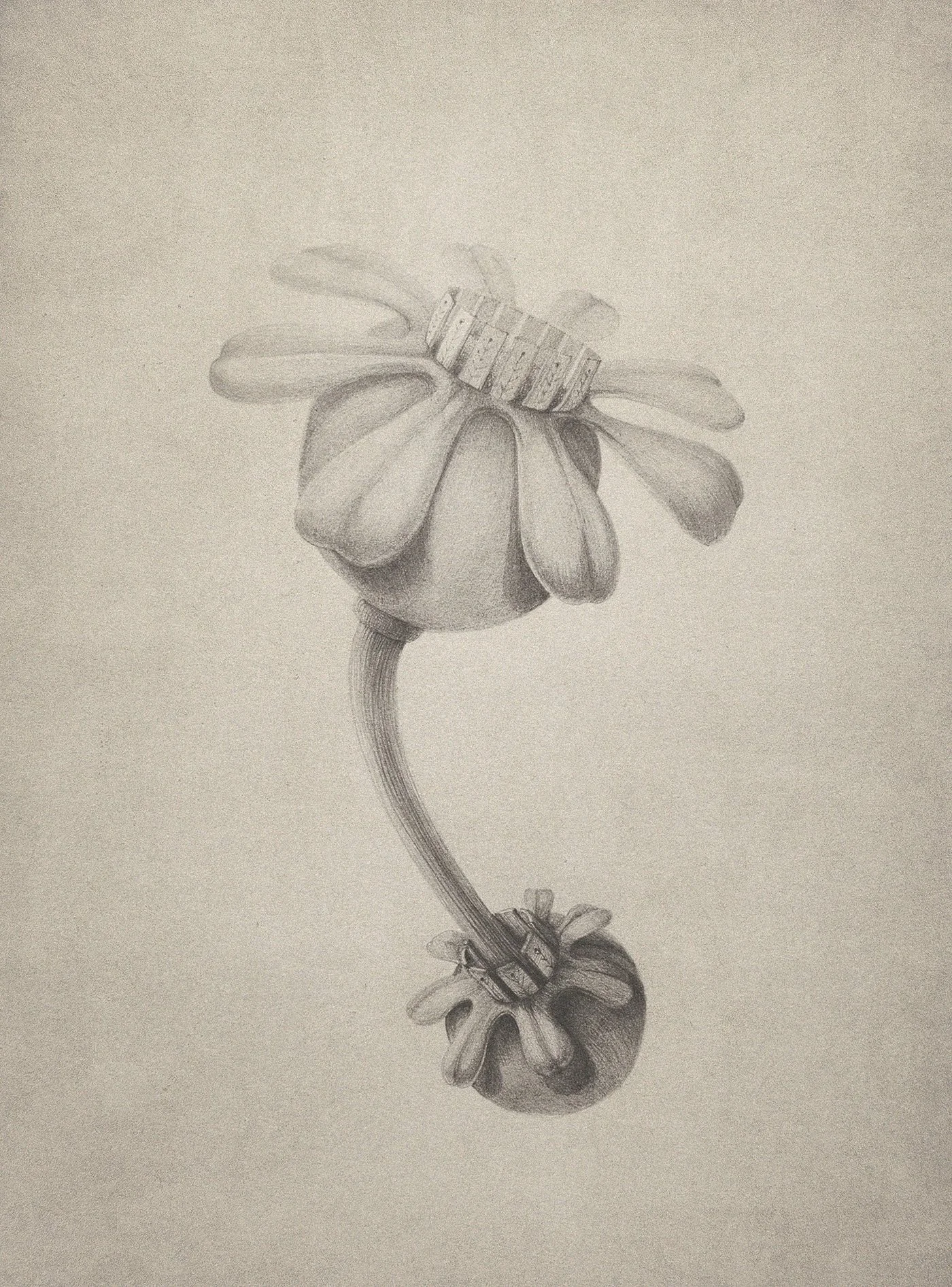
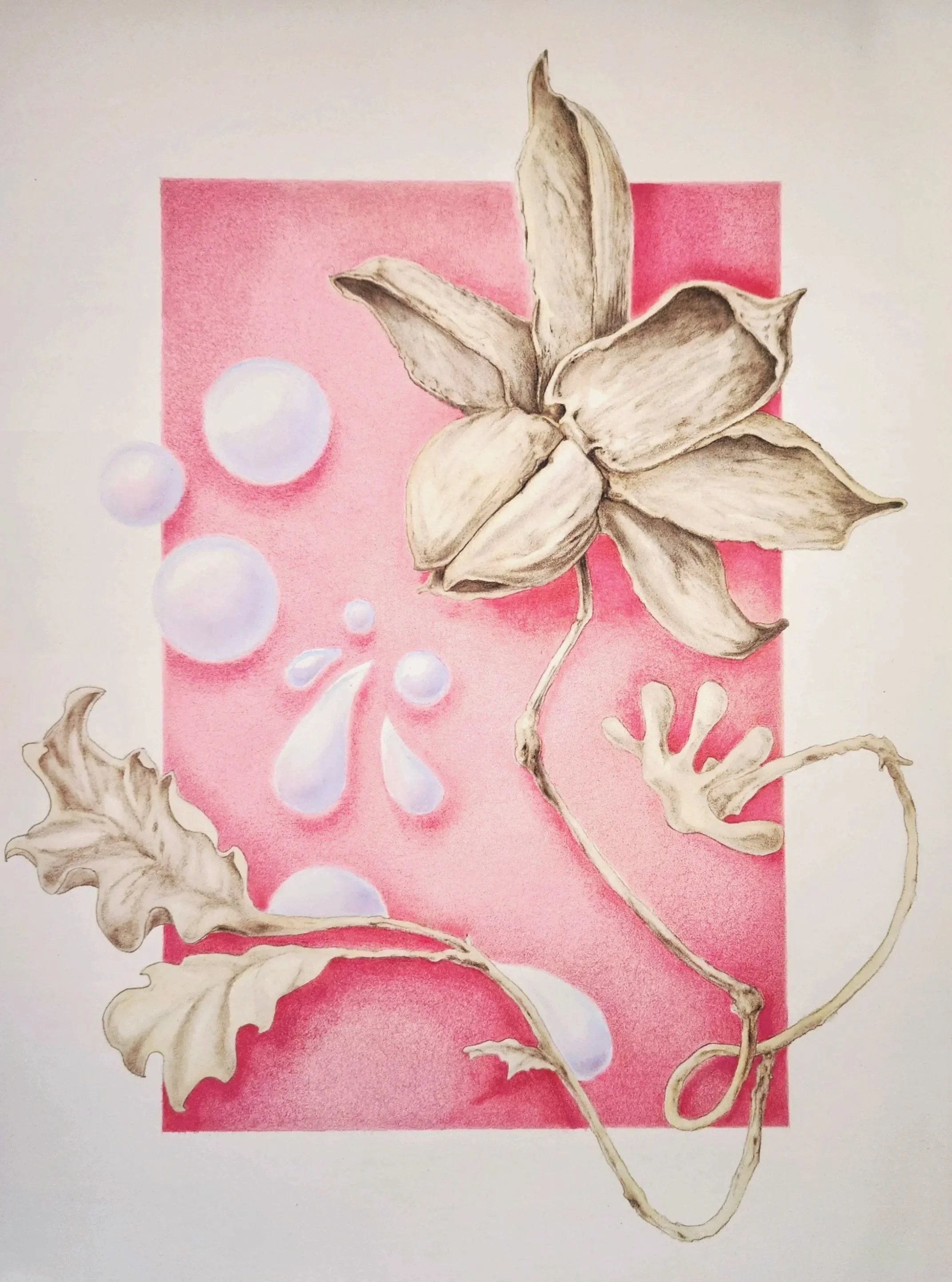
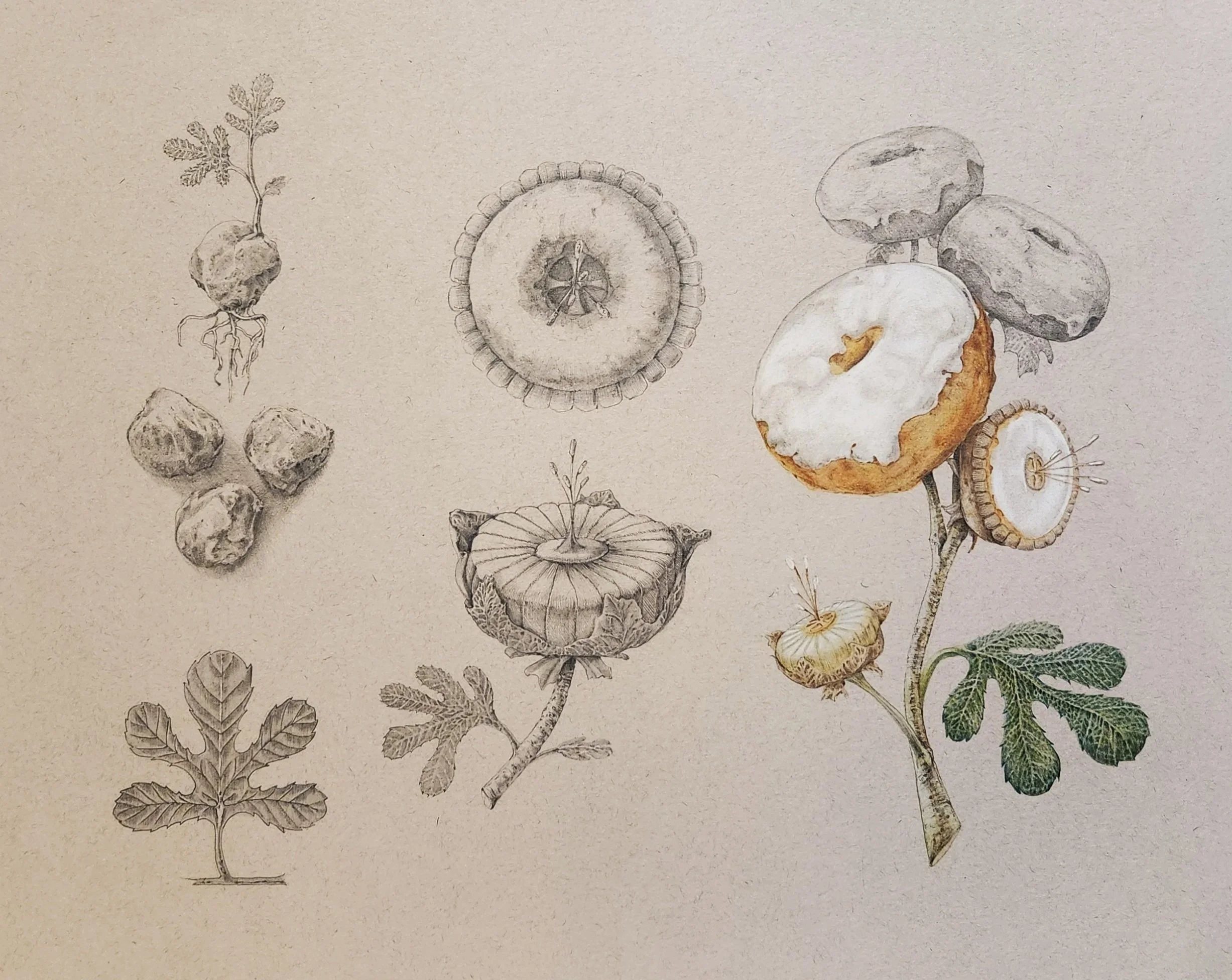
donut tree botanical study

It all starts with a donut hole.

18”x24” botanical study of Donut Tree seed pods, bloom, and leaves

donut bloom

Botanical study of a Donut Tree Bloom.

18”×24” pencil, ink, oil pastels, gouache

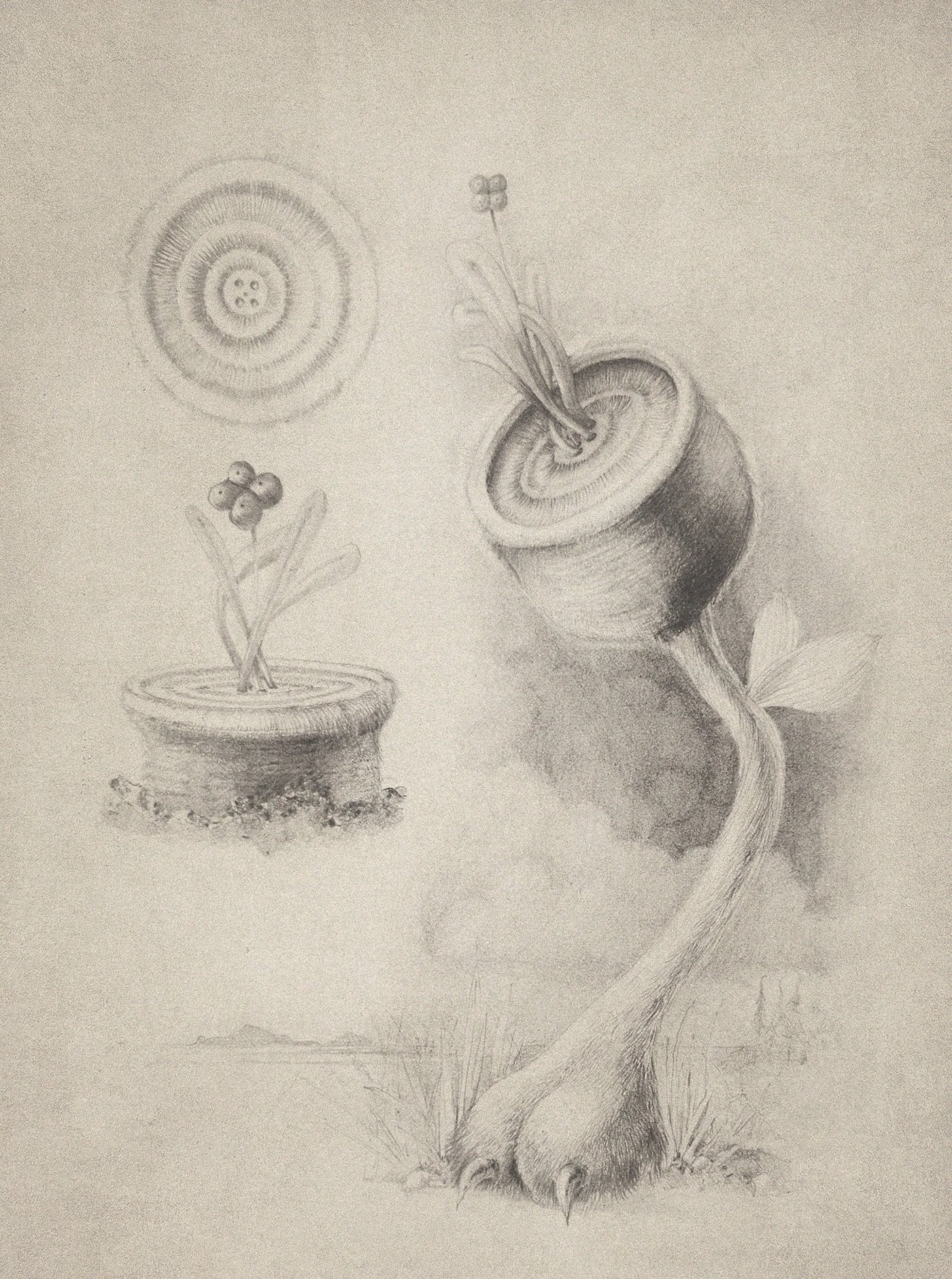
migrating trees

They migrate stealthily and silently under cover of darkness.

18”x24” graphite on craft paper

the concertina player

The Concertina Player, from the Instrumentalists series.

6”x8” ink and colored pencil

the violinist

The Violinist, from the Instrumentalists series.

6”x8” ink and colored pencil

the balalaika player

The Balalaika Player, from the Instrumentalists series.

6”x8” ink and colored pencil

buckeye

Seed study: the Buckeye

“Death brings life. Life brings death.” (Marieke Nijkamp)

alamo vine pod

Seed study: Texas Alamo Vine

“Death brings life. Life brings death.” (Marieke Nijkamp)

Cedar Pine Cone

Seed study: the Cedar Pine Cone

“Death brings life. Life brings death.” (Marieke Nijkamp)

senna alata

Seed study: Senna Alata medicinal tree

“Death brings life. Life brings death.” Marieke Nijkamp

Dried pods from the Senna Alata are commonly known as the Candleabra Plant.

Photo manipulation

datura

Seed study: Datura

“Death brings life. Life brings death.” Marieke Nijkamp

Datura is a genus species of extremely poisonous flowering plants that are part of the nightshade family (Solanaceae). Not surprisingly, they’re commonly known as thornapples. The seed pod is visually fascinating because it clearly communicates its toxicity.

10”x10” Photomanipulation

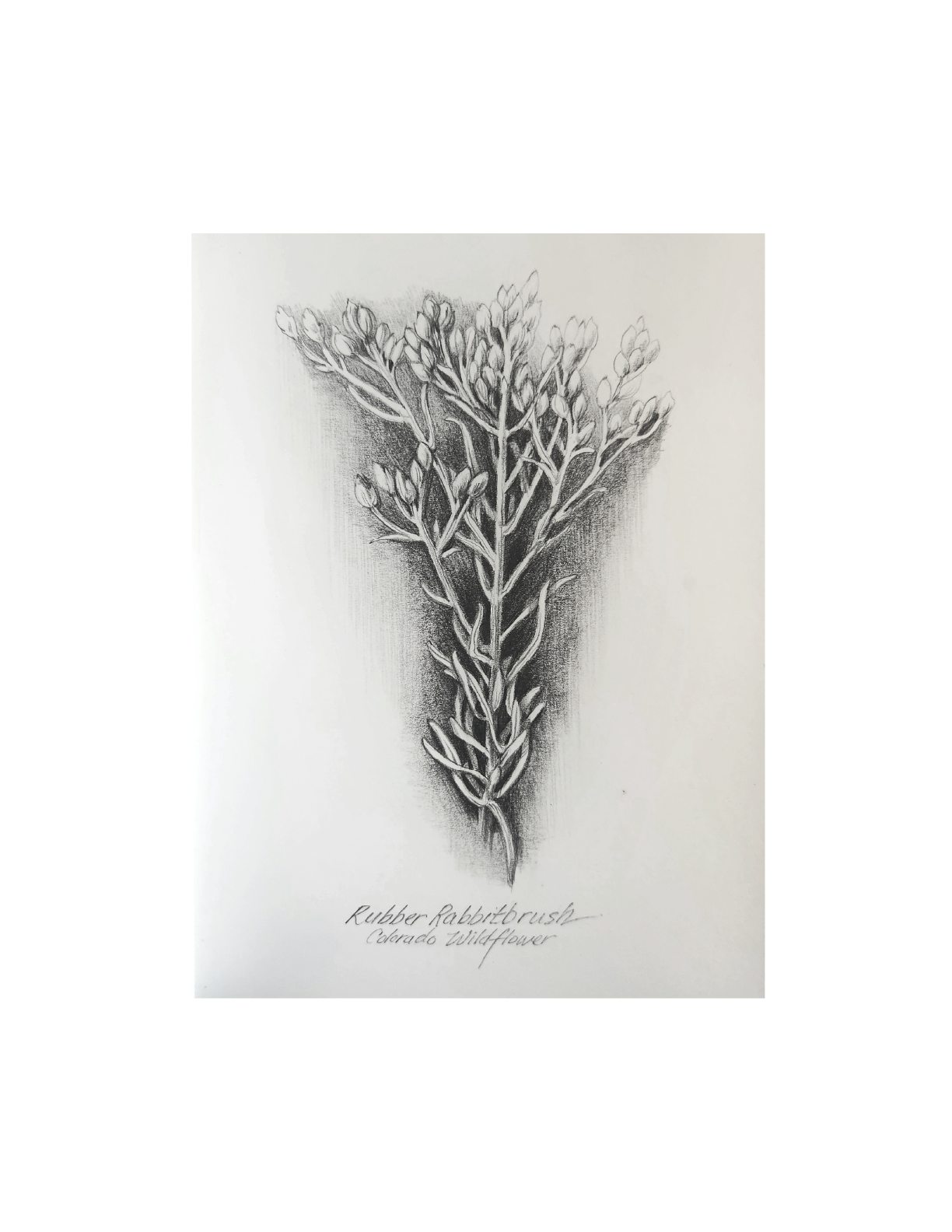
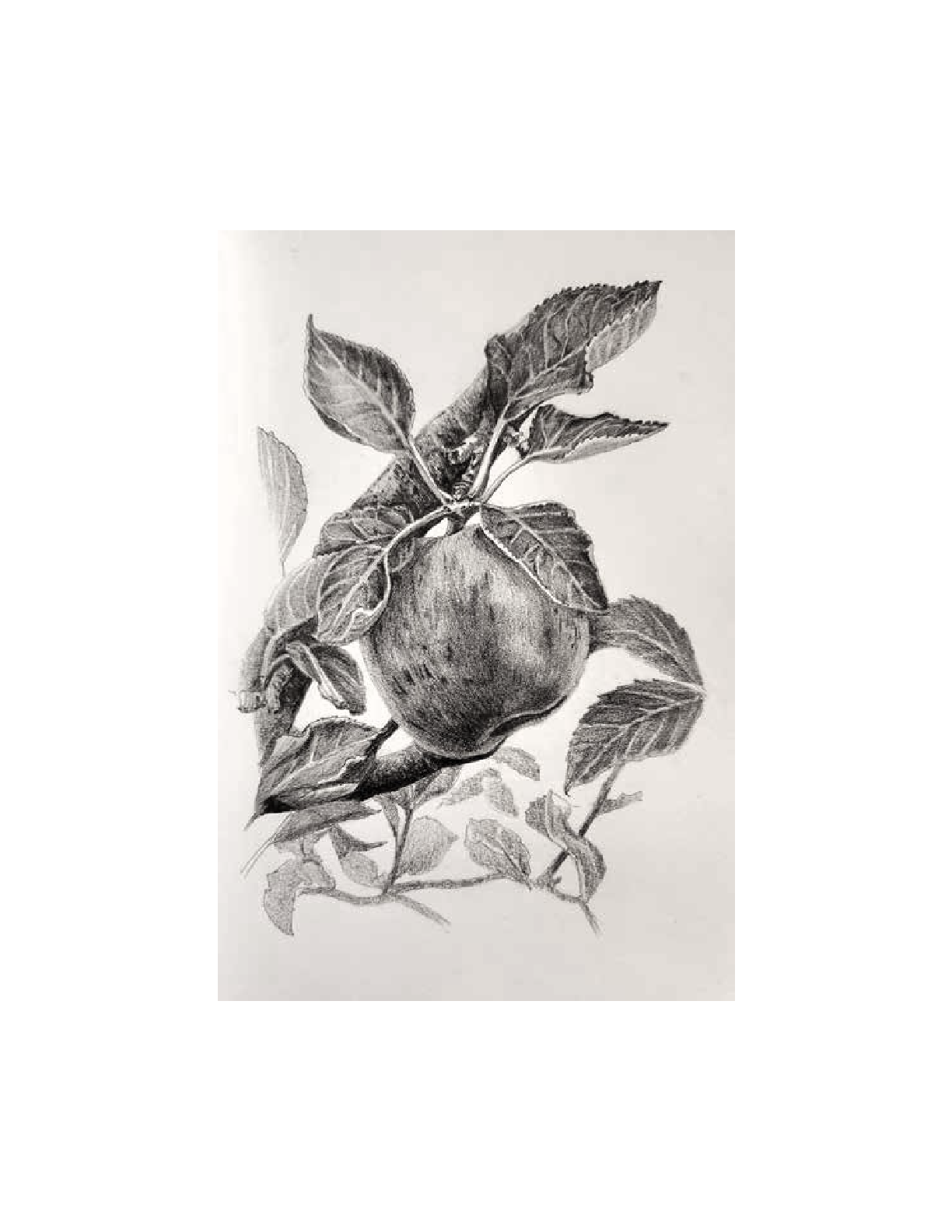
road trip sketches

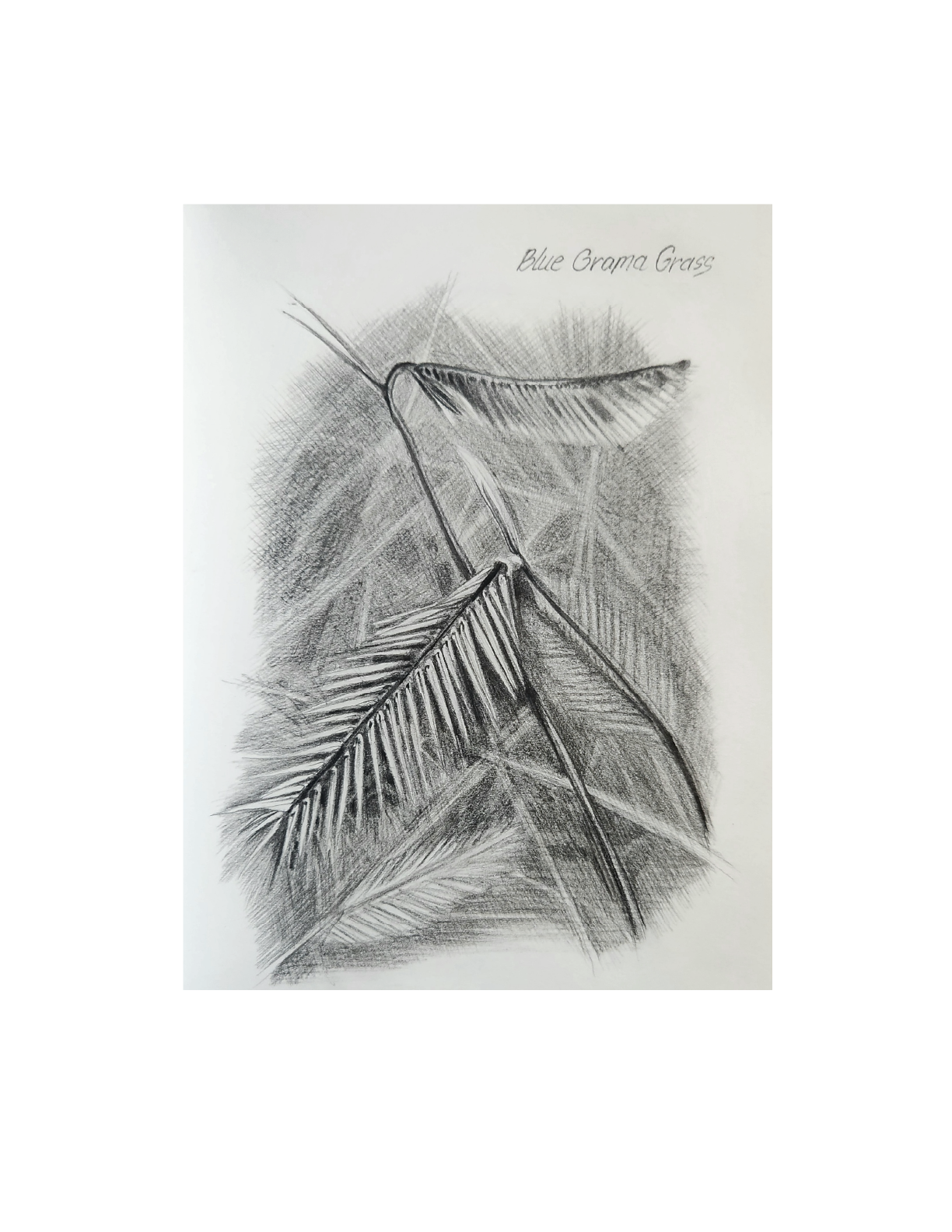
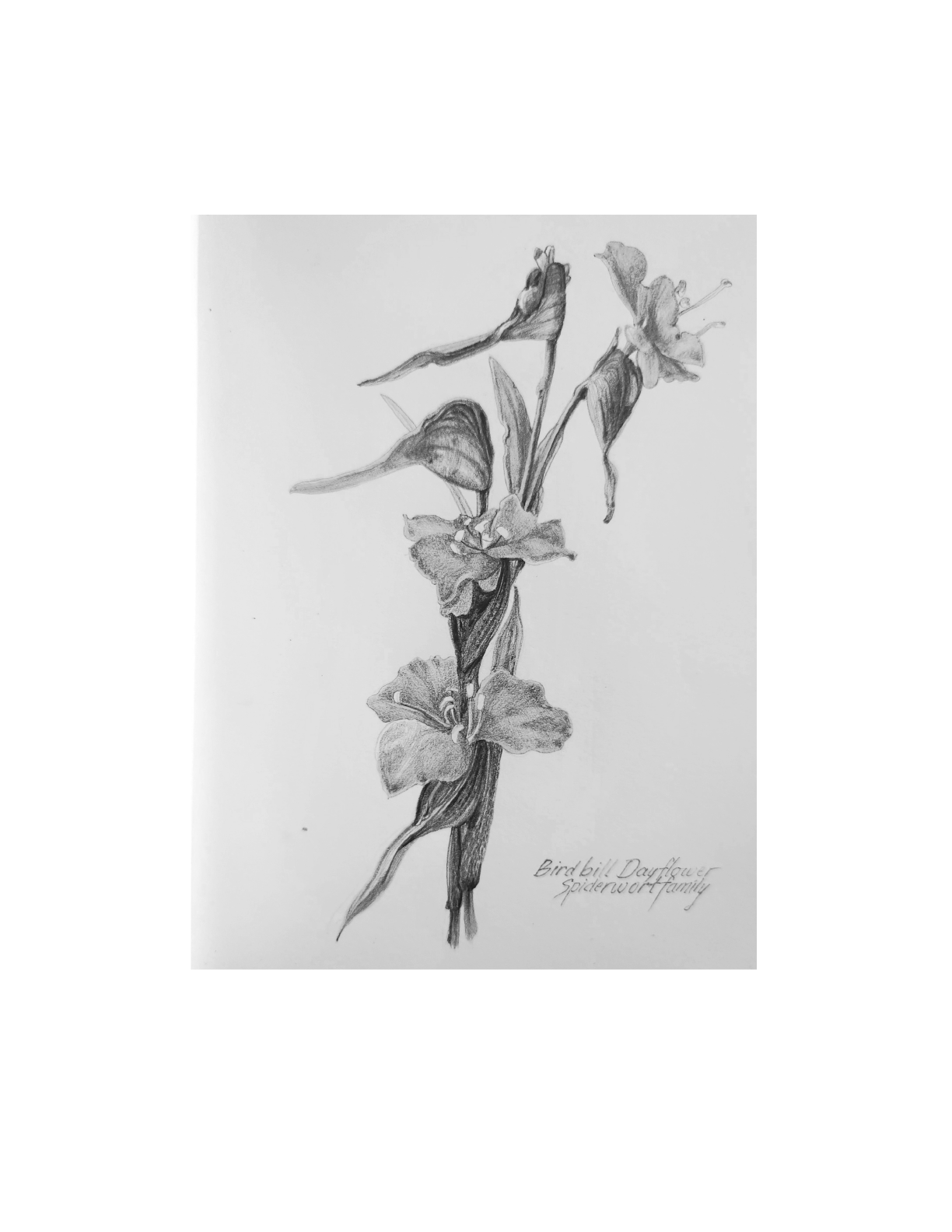
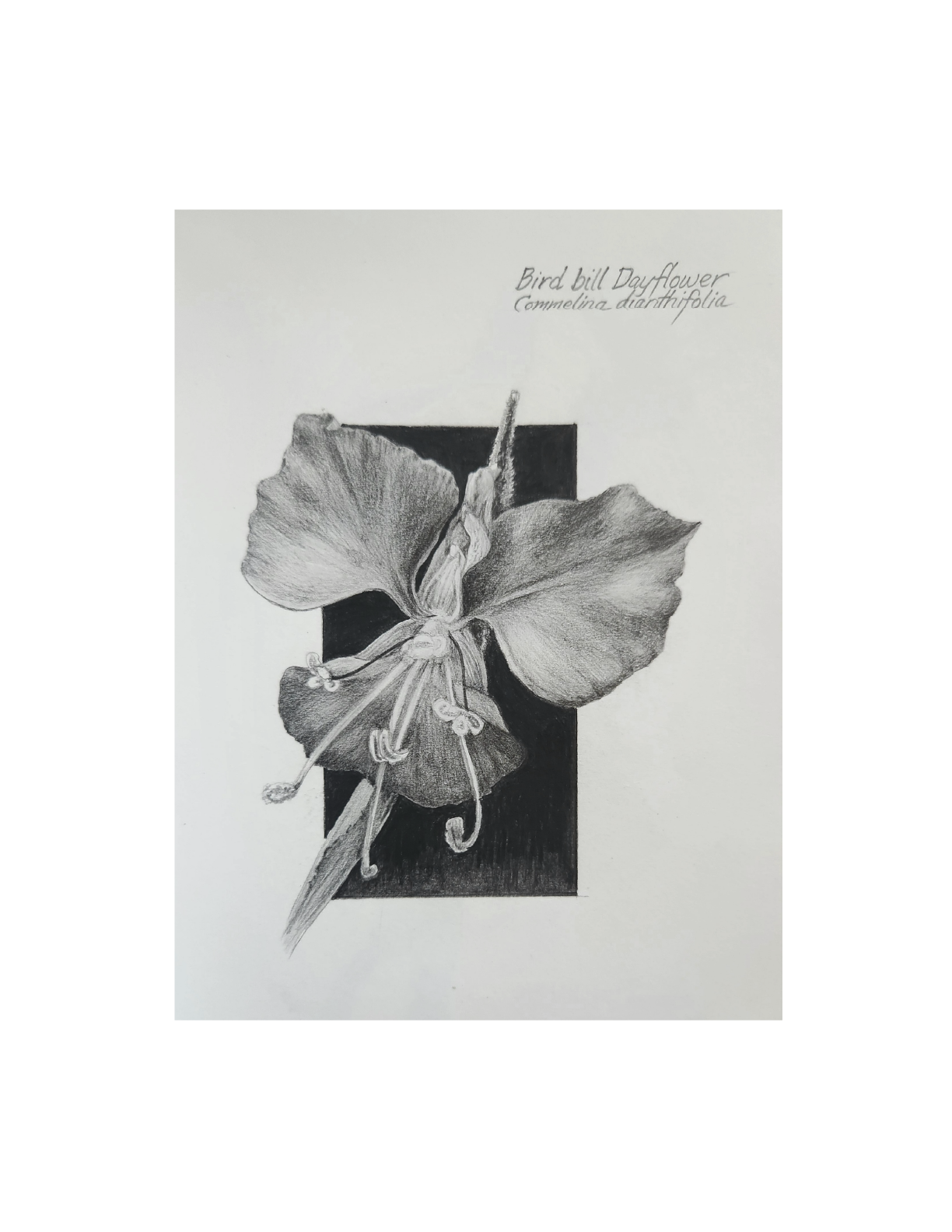
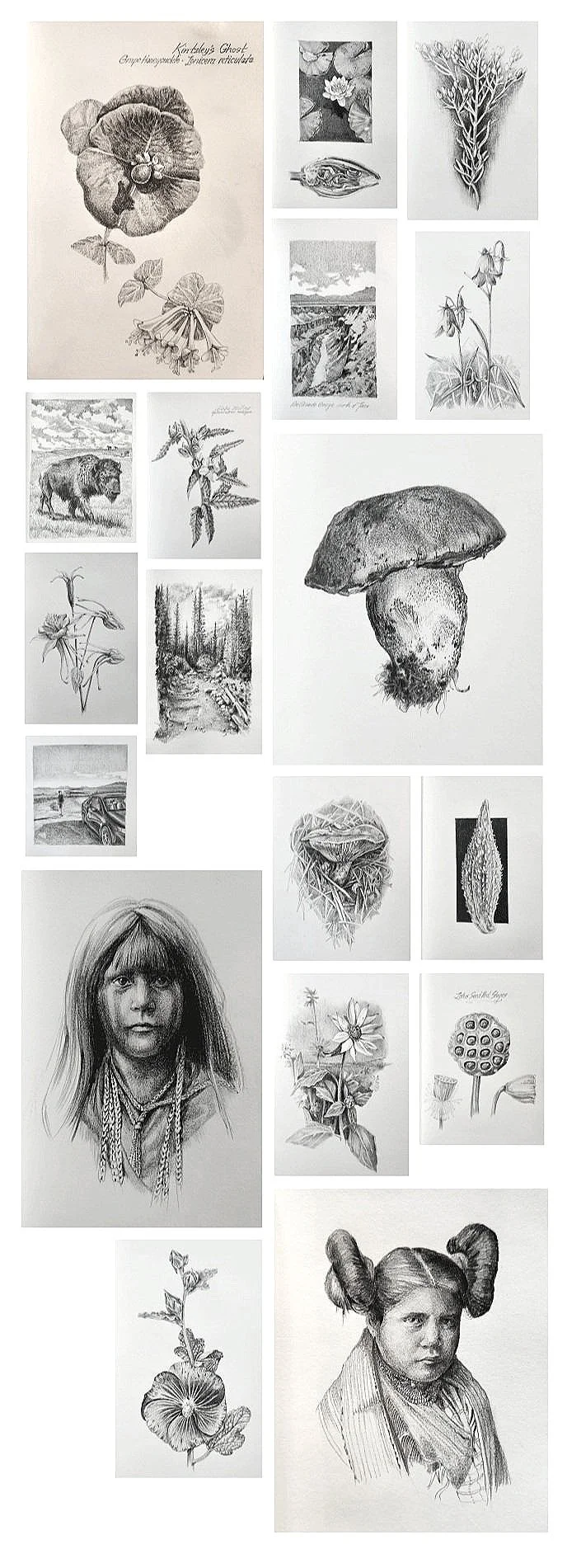
I like to document my travels and record what I see. These are my carbon pencil road trip sketches of various plants and experiences across Colorado, New Mexico and Texas. Overlooked plants along the roads and highways I travel on are of special interest to me. Many of them are incredibly resilient, surviving and even thriving with no help from humans. I believe they deserve more study and documentation. Who knows what we can learn from them and how these learnings can help our environmental future? Scroll down to see more.

poppies

Poppies in a field. 6×9. Mars Lumograph pencils.

poppy bud

Poppy buds are dramatic because many of them start off looking like hairy, awkward little monsters. But as they bloom, they develop into breathtaking, crisply petaled, colorful flowers. I love both stages, but I’m quite fond of the awkward one.

Poppy bud. 9x12. Bristol paper. Faber-Castell Polychromos color pencils, watercolor, gouache

rose hips

These are rose hips from a Just Joey Rose in my garden. Normally, it’s important to prune them off in order to encourage prolific blooming. But I leave some of these hips on my rose plants because they provide food for some of the surrounding wild life.

Rose hips. 9x12. Bristol paper. Faber-Castell Polychromos color pencils

flowering peony

The Peony is loved the world over for its fragrance and high petal count. This durable (though often fickle) perennial can live over 100 years.

commissioned. 27 x 27 Cotton paper, watercolor, Faber-Castell polychromos colored pencils, prismacolor

acorn

5”x7” Faber-Castell Polychromos colored pencil

potato heart

Potato heart. 6×9. Ink, Faber Castell Polychromos Color Pencil.

cyclamen pod

5”x7” Faber-Castell Polychromos colored pencil

craft paper sketches

5 x 7 paper. Toned tan sketch paper. Caran D’Ache Aquarelle pencil, Faber-Castell Polychromos pencils, Micron ink pen.

walking fish

Fish who will walk away from polluted water. Seals who will fly away from vicious sea predators. Polar bears who will simply swim like fish once there are no more icebergs. In my Future Life series, I invite reflection and imagination on the future of animal life.

Series of pencil, oil and gouache paintings done on sandpapered canvas, manipulated digitally then distressed organically through printing and soaking process.

chickadee

I foster a healthy ecosystem in my garden in order to attract our local and traveling birds. When I see an infestation of insects, I increase food in the bird feeders that surround my property. It’s one way to avoiding pesticide use. Plus, I get to observe these wonderful creatures more closely.

Chickadee. 5 x 5 cotton paper. Watercolors, ink pen

Suki

This is a rescue kitten named Suki. She makes funny faces.

5x7. Bristol paper. Faber-Castell Polychromos color pencils, watercolor, gouache

New Gallery

about me

— view —

aggressive coexistence

— view —

found objects

— view —

embroidered acorn

— view —

east texas forest floor

— view —

limb tree

— view —

streetlife - a photo essay

— view —

buddha's hands

— view —

dried garlic flower

— view —

the donut tree

— view —

donut tree botanical study

— view —

donut bloom

— view —

migrating trees

— view —

the concertina player

— view —

the violinist

— view —

the balalaika player

— view —

buckeye

— view —

alamo vine pod

— view —

Cedar Pine Cone

— view —

senna alata

— view —

datura

— view —

road trip sketches

— view —

poppies

— view —

poppy bud

— view —

Arseniev_PeonyBud.jpg

rose hips

— view —

flowering peony

— view —

Peony+final_small.jpg

acorn

— view —

potato heart

— view —

cyclamen pod

— view —

craft paper sketches

— view —

walking fish

— view —

chickadee

— view —

chickadee+5x5.jpg

Suki

— view —